

The Sacrament of the Body and Blood of Christ
What to expect from the Holy Communion Services at Covenant Church of London
At Covenant Church, we seek to give the Word of God first place in guiding us as we celebrate this sacrament. We do so in continuity with the Church throughout history, not as spectators, but together as the Household of God, bringing our praises before our King.
Our service follows a gospel-centred pattern that includes Scripture readings, confession of sins, the assurance of forgiveness, congregational singing, prayers of adoration and thanksgiving, intercessions for the Church and the world, the preaching of God’s Word, the administration of the Holy Sacrament, and the benediction. This pattern is shaped by the story of redemption: creation, fall, redemption, and restoration.
If you are visiting, or are new to liturgical worship, this section of our website is intended to help you understand how we worship and why, so that you may worship together with us. Here you will find resources concerning our celebration of the Lord’s Supper, including the historic Form for the Administration of the Lord’s Supper received by the Synod of Dort in 1618–1619, the teaching of our doctrinal standards concerning the sacrament, guidance for self-examination, and other resources relating to Holy Communion.
Throughout the liturgy, you will see portions printed in bold. These are the congregational responses and prayers, which we say together as we pray the Scriptures and respond to God’s Word as His Church.
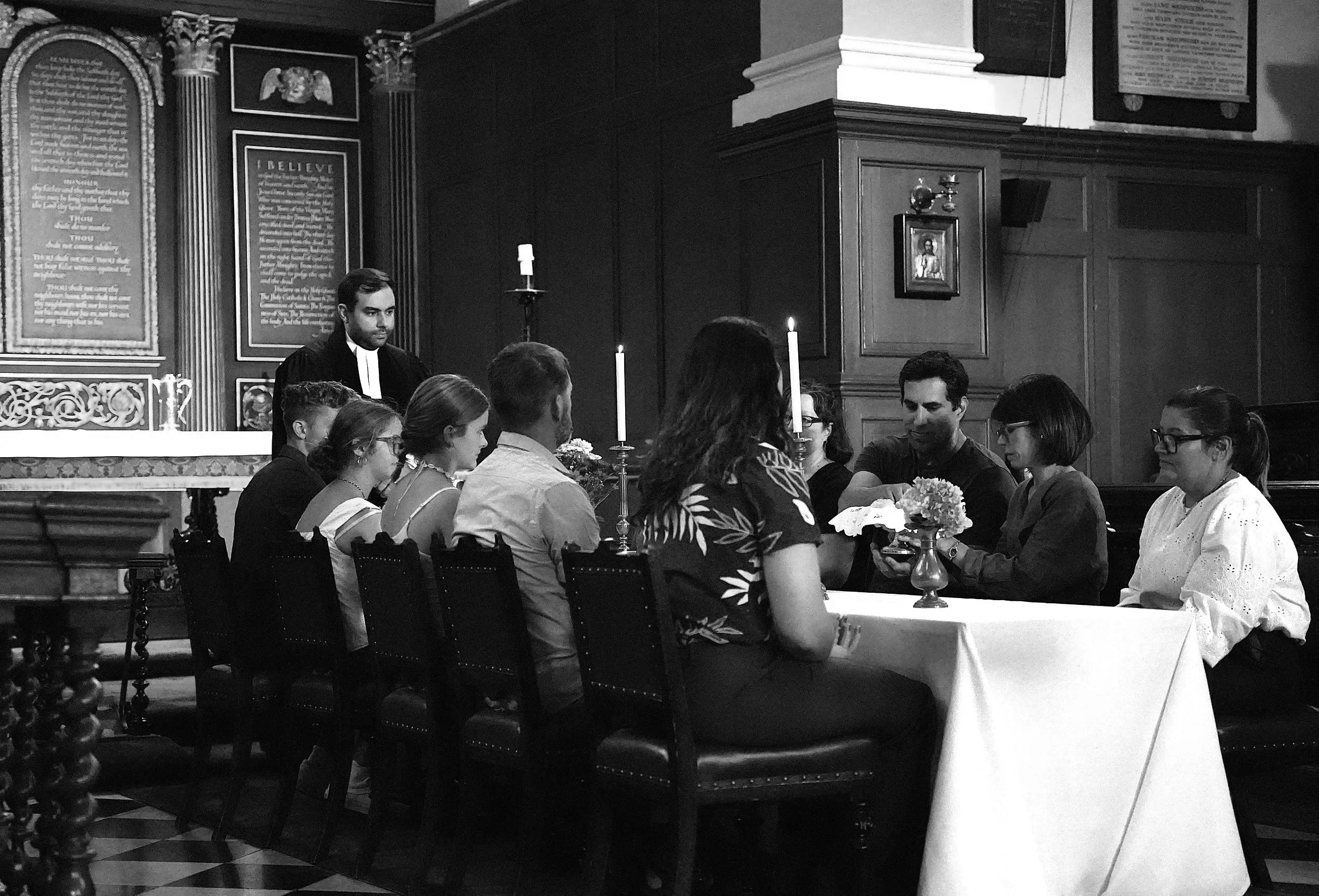
At the appointed time, communicant members are invited by the Minister to come forward, take their places at the Lord’s Table, and partake together of the bread and wine. None should come except baptised Christians who make a true profession of faith, are sorry for their sins, believe the promises of God in Christ, and sincerely resolve, by His grace, to walk according to His commandments. Those who persist in open and unrepentant sin should refrain from coming to the Table, and those under the discipline, censure, or excommunication of the Church must not partake.
Please note that Covenant Church does not practise infant communion (paedocommunion). Participation in the Lord’s Supper is for baptised Christians who are able to make a credible profession of faith.
Members of other Protestant churches who are in full communion and good standing with their own congregation are also welcome to partake. If you are visiting and wish to receive the Lord’s Supper, please speak with the Minister or one of the elders before the service.
May the Lord bless our remembrance of the death of Christ, strengthening our faith and fellowship with Him, deepening our communion with one another as the saints of God, and equipping us by His Spirit to bear witness to the good news as we await our Saviour’s return in glory.
Holy Communion Services
The Sacrament of the Lord’s Supper is Regularly Administered Every 1st Lord’s Day of each Month.
A Prayer before the Lord’s Supper by John Calvin

HEAVENLY FATHER, full of all goodness and mercy, as our Lord Jesus Christ has not only offered His body and blood once upon the Cross for the remission of our sins, but also desires to impart Himself to us as our nourishment unto everlasting life, we ask You to grant us this grace: that we may receive at His hands so great a gift and benefit with true sincerity of heart and ardent zeal.
In steadfast faith, may we receive His body and blood, indeed Christ Himself entire, who, being true God and true man, is the true heavenly bread which gives us life. So may we no longer live in ourselves, according to our nature, which is wholly corrupt and disordered; but may He live in us, and lead us to the life that is holy, blessed, and everlasting.
By this, may we truly become partakers of the new and eternal covenant, the covenant of grace, assured that it is Your good pleasure to be our gracious Father for ever, never reckoning our faults against us, but providing for us, as Your beloved children and heirs, all that we need in body and soul. Thus may we render praise and thanks to You without ceasing, and magnify Your Name in word and deed.
Grant us, therefore, O Heavenly Father, so to celebrate this day the blessed memorial and remembrance of Your dear Son, to exercise ourselves in it, and to proclaim the benefit of His death, that, receiving new growth and strength in faith and in all good works, we may with greater confidence call You our Father and glory in You; through Jesus Christ, Your Son, our Lord. Amen.
A Guide for Self-examination
Received by the Reformed
Synod of Dort in 1618–1619
INVITATION AND ADMONITION
Beloved in the Lord Jesus Christ, hear the words of the institution of the Holy Supper of our Lord Jesus Christ, as they are given to us by the holy Apostle Paul in 1 Corinthians 11:23–30.
For I received from the Lord what I also passed on to you: The Lord Jesus, on the night he was betrayed, took bread, and when he had given thanks, he broke it and said, “This is my body, which is for you; do this in remembrance of me.” In the same way, after supper he took the cup, saying, “This cup is the new covenant in my blood; do this, whenever you drink it, in remembrance of me.” For whenever you eat this bread and drink this cup, you proclaim the Lord’s death until he comes.
So then, whoever eats the bread or drinks the cup of the Lord in an unworthy manner will be guilty of sinning against the body and blood of the Lord. Everyone ought to examine themselves before they eat of the bread and drink from the cup. For those who eat and drink without discerning the body of Christ eat and drink judgement on themselves. That is why many among you are weak and sick, and a number of you have fallen asleep.
That we may now celebrate the Supper of the Lord to our comfort, it is necessary that we rightly examine ourselves. True self-examination consists of three parts:
First, that each of you carefully consider your sins and the curse due to you for them, so that you loathe and humble yourself before God, considering that the wrath of God against sin is so great that He, rather than leaving it unpunished, has punished it in His beloved Son, Jesus Christ, with the bitter and shameful death of the cross (Gal 3:10; Ezek 36:31; Gal 3:13).
Second, that each of you examine your heart whether you believe this trustworthy promise of God: that all your sins are forgiven only for the sake of the suffering and death of Jesus Christ and that the perfect righteousness of Christ is graciously imputed to you as your own—indeed, so completely as if you personally had satisfied for all your sins and fulfilled all righteousness (Luke 24:46–47; Col 1:20; 2:14; Rom 3:21–26).
Third, that each of you carefully examine your own conscience to see if you are determined to show true thankfulness to God in every area of life and to walk uprightly before His face by striving to lay aside all hostility, hatred, and envy, resolving from this day forward to live in true love and peace with your neighbour (Eph 5:1–8; Gen 17:1; Eph 4:31–32; Rom 12:18; 1 Jn 5:1–3).
All those, then, who are of this mind God will certainly receive in grace as worthy partakers of the table of His Son Jesus Christ (1 Corinthians 10:16). On the contrary, those who do not have this testimony in their hearts (1 John 5:10) eat and drink judgment to themselves (1 Corinthians 11:29–30).
Therefore, according to God's Word, we admonish all who continue in the following sins (1 John 3:8–9) to abstain from the Lord’s Supper and declare that they have no part in the kingdom of Christ:
All idolaters—that is, those who refuse to trust in the Lord alone (Deuteronomy 6:4–6); worship God contrary to His commands, according to their own desires (Colossians 2:23); despise God and His Word; abuse the name of the Lord; wilfully neglect the worship services (Hebrews 10:25) and profane the holiness of the Lord's Day; rebel against authority in family, church, or state; violate human life; abuse alcohol or other substances; cherish hatred and bitterness; live in adultery or any other sexual sin; steal or gamble; lie, gossip, or slander; envy or covet. All these show themselves to be unrepentant by leading worldly and offensive lives (Exodus 20:1–17; 1 Corinthians 6:9–10; Galatians 5:19–21).
But beloved brothers and sisters (2 Thessalonians 2:13), this warning is not intended to discourage the broken and contrite hearts of believers (Psalm 34:18; 51:17), as if no one might come to the Lord’s Supper except the sinless (1 John 1:8–9; 2:1–2). For we do not come to this Supper to declare that we are perfect and righteous in ourselves, but on the contrary, groaning under the body of this death (Romans 7:14–25), we seek our life outside of ourselves in Jesus Christ (Galatians 2:20). We come confessing that we do have many faults and that we do not have perfect faith (Matthew 26:41).
We do not serve God with sufficient zeal, but we struggle daily with the weakness of our faith (Matthew 6:30; 14:31; 16:8) and against the evil lusts of our flesh (Galatians 5:16–17). However, since by the work of the Holy Spirit we are made sorry for our sins (Psalm 38:17–18), earnestly desire to fight against unbelief (Mark 9:24), and live according to all God’s commandments (Psalm 119:1–8), therefore we can rest assured that no sin or weakness that remains in us against our will (Romans 7:15, 19) can prevent us from being received by God in grace and mercy (Romans 7:24–25), as worthy partakers of this heavenly food and drink (1 Corinthians 11:26, 31).
REMEMBRANCE OF CHRIST
Let us now consider the purpose for which our Lord has instituted His Supper—namely, that we do it in remembrance of Him (1 Corinthians 11:24–25). We are to remember Him in the following manner:
First, that our Lord Jesus Christ, as promised in the Old Testament (Genesis 3:15), was sent by the Father into this world (1 John 4:14). He assumed our flesh and blood (Hebrews 2:14). From the beginning of His incarnation until the end of His life on earth, He has taken on Himself the wrath of God under which we should have perished eternally (Romans 2:5; 5:9). He has also fulfilled for us all the obedience and righteousness God required (Galatians 4:4–5).
All this was especially evident when the weight of our sins and God's wrath pressed out of Him sweat like great drops of blood (Luke 22:44). He was bound that we might be loosed from our sins (Psalm 116:16; John 18:12). He suffered countless insults that we might never be put to shame (Psalm 25:3; John 19:1–6).
Further, though innocent, He was put to death that we might be acquitted on the day of judgment (Romans 8:1); He allowed His own blessed body to be nailed to the cross to cancel the record of debt that stood against us with its legal demands. This He set aside, nailing it to the cross (Colossians 2:14-15). In doing so, He took from us our curse and bore it Himself that He might fill us with His blessing (Galatians 3:13–14).
On the cross He humbled Himself to the deepest reproach and anguish of hell, in body and soul, when He cried out with a loud voice, “My God, My God, why have You forsaken Me?” (Matthew 27:46). He did all this so that we might be accepted by God, never to be forsaken by Him (Hebrews 13:5). Indeed, with His death and the shedding of His blood, He has confirmed the new and eternal covenant, the covenant of grace and reconciliation (Hebrews 9:15), when He said, “It is finished!” (John 19:30).
Second, in order that we might firmly believe that we belong to this covenant of grace, during His last supper Jesus took bread, blessed and broke it, and gave it to His disciples and said, “Take, eat; this is My body.” Then He took the cup, and gave thanks, and gave it to them, saying, “Drink from it all of you. For this is My blood of the new covenant, which is shed for many for the remission of sins.” (Matthew 26:26–28)
That is, as often as you eat this bread and drink this cup, you are reminded and assured of My great love and faithfulness toward you. Since you otherwise would have suffered eternal death, I have given my body and blood for you in My death on the cross. As certainly as this bread is broken before you, and this cup is given to you, and with your mouth you eat and drink in remembrance of me, so surely do I nourish and refresh your hungry and thirsty souls to everlasting life with my crucified body and shed blood (John 6:51–58).
ASSURANCE
From the institution of this Holy Supper of our Lord Jesus Christ, we see that He directs our faith to His perfect sacrifice, once offered on the cross, as the only foundation of our salvation (Hebrews 10:19–23). By this sacrifice He has become to our hungry and thirsty souls the true food and drink of life eternal (John 6:57). For by His death, He has taken away the cause of our eternal death and misery: our sin. He has also obtained for us the life-giving Spirit (Romans 8:3–4), who dwells in Christ our head and in us, His members, so that we have communion with Him (1 Corinthians 10:16) and are made partakers of all His blessings, eternal life, righteousness, and glory (Romans 8:29–30).
FELLOWSHIP
By this same Spirit we are also united as members of one body in true Christian love, as the apostle Paul says, “For we, though many, are one bread and one body; for we all partake of that one bread” (1 Corinthians 10:17). As many grains are ground to prepare one bread, and as many grapes are pressed to produce one wine, so we who are incorporated into Christ by true faith should live as one body. He loved us so greatly that we might show His love toward one another, not only in words but also in deeds (1 John 3:18).
May the Almighty, Merciful God and Father of our Lord Jesus Christ help us in this, through His Holy Spirit (Ephesians 1:17–20). Amen.
The Liturgical Form for the Administration of the Lord’s Supper
Received by the Reformed Synod of Dort in 1618–1619
1. The Congregation being assembled, the Minister shall solemnly call them to Worship, saying:
In the name of the Father, and of the Son, and of the Holy Spirit. Amen.
Our help is in the name of the LORD,
Maker of heaven and earth. Psalm 124:8.
What shall we render to the LORD
For all His benefits toward us?
We will take up the cup of salvation,
And call upon the name of the LORD. Psalm 116:12-13.
Blessed are those who hunger and thirst for righteousness,
For they shall be filled. Amen. Matthew 5:6.
2. The Minister shall proclaim the Law of God, exhorting the Congregation to repentance, faith, and holiness of life.
And God spoke all these words, saying: I am the LORD your God.
You shall have no other gods before me.
You shall not make for yourself a graven image, or any likeness of anything that is in heaven above, or that is in the earth beneath, or that is in the water under the earth. You shall not bow down to them or worship them.
You shall not take the name of the LORD your God in vain, for the LORD will not hold him guiltless who takes his name in vain.
Remember the Sabbath day, to keep it holy. Six days you shall labour, and do all your work, but the seventh day is a Sabbath to the LORD your God.
Honour your father and your mother, that your days may be long in the land that the LORD your God is giving you.
You shall not murder.
You shall not commit adultery.
You shall not steal.
You shall not bear false witness against your neighbour.
You shall not covet anything which belongs to your neighbour.
LORD, have mercy upon us,
and incline our hearts to keep this law.
3. The Minister or Music Director shall lead the Congregation in singing a Psalm of repentance.
4. The Minister shall then exhort the Congregation to self-examination, saying:
THEREFORE, whoever eats this bread or drinks this cup of the Lord in an unworthy manner will be guilty of the body and blood of the Lord. But let a man examine himself, and so let him eat of the bread and drink of the cup. For he who eats and drinks in an unworthy manner eats and drinks judgement to himself, not discerning the Lord’s body. 1 Corinthians 11:27-29.
That we may now celebrate the Supper of the Lord to our comfort, it is necessary that we rightly examine ourselves. True self-examination consists of three parts:
First, that each of you carefully consider your sins and the curse due to you for them, so that you loathe and humble yourself before God, considering that the wrath of God against sin is so great that He, rather than leaving it unpunished, has punished it in His beloved Son, Jesus Christ, with the bitter and shameful death of the cross. [Gal 3:10; Ezek 36:31; Gal 3:13]
Second, that each of you examine your heart whether you believe this trustworthy promise of God: that all your sins are forgiven only for the sake of the suffering and death of Jesus Christ and that the perfect righteousness of Christ is graciously imputed to you as your own—indeed, so completely as if you personally had satisfied for all your sins and fulfilled all righteousness. [Lk 24:46–47; Col 1:20; 2:14; Rom 3:21–26]
Third, that each of you carefully examine your own conscience to see if you are determined to show true thankfulness to God in every area of life and to walk uprightly before His face by striving to lay aside all hostility, hatred, and envy, resolving from this day forward to live in true love and peace with your neighbour. [Eph 5:1–8; Gen 17:1; Eph 4:31–32; Rom 12:18; 1 Jn 5:1–3]
O come, let us worship and bow down:
let us kneel before the LORD our maker. Psalm 95:6.
5. After a moment of silent prayer, the Congregational Prayers of Confession shall be said, using words of Holy Scripture.
Beloved in the Lord, let us draw near with a true heart and confess our sins to God our Father, asking Him, in the name of our Lord Jesus Christ, to grant us forgiveness. Let us pray:
GOD, have mercy on me, a sinner. Luke 18:13.
JESUS, Son of David, have mercy on me! Mark 10:47.
LORD, Son of David, have mercy on us! Matthew 20:31.
SEEK the LORD while He may be found,
Call upon Him while He is near.
Let the wicked forsake his way,
And the unrighteous man his thoughts;
Let him return to the LORD,
And He will have mercy on him;
And to our God,
For He will abundantly pardon.
Isaiah 55:6-7.
Wash me thoroughly from my iniquity,
and cleanse me from my sin.
For I acknowledge my transgressions:
and my sin is ever before me.
Psalm 51:2-3.
RETURN, O Israel, to the LORD your God,
for you have stumbled because of your iniquity;
Bring your confessions and return to the LORD. Say to Him:
Take away all our iniquity
and receive us graciously,
for we will offer the sacrifices of our lips.
Hosea 14: 1-2.
MOST MERCIFUL GOD, who has given Your only-begotten Son to die upon the cross for the redemption of sinners: have mercy upon you; grant you the remission of all your sins; and by His Holy Spirit increase in you true knowledge of Christ, and true obedience to His Word, to the end that by His grace alone you may come to everlasting life; through Jesus Christ our Lord. Amen.
“Blessing and honour and glory and power
Be to Him who sits on the throne,
And to the Lamb, forever and ever!” Amen.
Revelation 5:13.
6. Prayers of intercession shall be led by the Minister, including petitions for the world, the country, the Civil Government and Royal Family, the sick, the community, the Church, and the spread of the Gospel.
7. A sermonic hymn of preparation shall be sung, during which the Congregation shall present their tithes and offerings to the Lord.
Details for Bank Transfers: Covenant Presbyterian Mission
Sort Code: 30-54-66 | Account Number: 2619 2460
8. The Reading of God’s Word shall follow, after which the Minister shall preach the Sermon from the Holy Scriptures.
9. The Minister shall then read the Words of Institution from Holy Scripture, declaring how our Lord Jesus Christ ordained His Holy Supper.
BELOVED IN OUR LORD JESUS CHRIST, listen to the words of institution as they are described by the apostle Paul:
For I received from the Lord that which I also delivered to you: that the Lord Jesus on the same night in which He was betrayed took bread; and when He had given thanks, He broke it and said, “Take, eat; this is My body which is broken for you; do this in remembrance of Me.”
In the same manner He also took the cup after supper, saying, “This cup is the new covenant in My blood. This do, as often as you drink it, in remembrance of Me.” For as often as you eat this bread and drink this cup, you proclaim the Lord’s death till He comes.
1 Corinthians 11:23-26.
10. The Minister shall lead the Congregation in Prayers of Thanksgiving and in the Lord’s Prayer, after which all shall confess the Christian faith in the words of the Apostles’ Creed.
That we may obtain all these blessings, let us humble ourselves before God and with true faith implore Him for His grace:
OUR MOST MERCIFUL GOD AND FATHER, in this Supper we celebrate the glorious remembrance of the bitter death of Your beloved Son, Jesus Christ. Be pleased to work in our hearts through Your Holy Spirit, so that we may daily more and more with true confidence give ourselves up to Your Son Jesus Christ. May our afflicted and contrite hearts be fed with Christ’s true body and blood—yes, with Him, true God and man, the only heavenly bread.
Grant that as fruit of being made partakers of the new and everlasting covenant of grace, we no longer live in our sins, but Christ in us and we in Him.
We pray that we would be reassured that You will forever be our gracious Father, never imputing our sins to us and providing us with all things necessary for body and soul as Your beloved children and heirs. Grant us also Your grace, that we may take up our cross cheerfully, deny ourselves, confess our Saviour, and in all our tribulations look up expectantly for our Lord Jesus Christ to come from heaven to take us to Himself in eternity. Amen.
OUR FATHER Which art in heaven, hallowed be Thy name. Thy kingdom come, Thy will be done in earth, as it is in heaven. Give us this day our daily bread. And forgive us our trespasses, as we forgive them that trespass against us; and lead us not into temptation, but deliver us from the evil one: for Thine is the kingdom, and the power, and the glory, for ever and ever. Amen.
Matthew 6:9–13; Luke 11:1–4.
Strengthen us also in the most holy universal faith, of which we make profession with heart and mouth, saying:
I BELIEVE in God the Father Almighty, Exodus 6:3.
Maker of heaven and earth: Genesis 1:1.
And in Jesus Christ His only Son our Lord, John 1:1; Acts 10:36.
Who was conceived by the Holy Spirit, Luke 1:35.
Born of the virgin Mary, Matthew 1:23,25.
Suffered under Pontius Pilate, Matthew 27:24,25.
Was crucified, dead, and buried: Matthew 27:35; Luke 23:46; Matthew 27:59-60.
He descended into hell; 1 Peter 3:19.
The third day He rose again from the dead; Luke 24:6.
He ascended into heaven, Acts 1:9.
And sitteth on the right hand of God, Acts 7:55.
the Father Almighty; Acts 7:55.
from thence He shall come to judge Acts 1:11; 17:31.
the quick and the dead. 2 Corinthians 5:10.
I believe in the Holy Spirit; Mark 1:10.
the holy Christian church; Hebrews 12:22.
the Communion of Saints; Hebrews 12:23.
the Forgiveness of sins; Hebrews 9:15.
the Resurrection of the body, 1 Corinthians 15:12-16.
and the Life everlasting. Amen. John 3:16; 5.24; Revelation 22:20.
11. The Minister shall fence the Table, declaring that none should come except baptised Christians who, with a true profession of faith, are sorry for their sins, believe the promises of God in Christ, and sincerely resolve, by His grace, to walk according to His commandments. All who persist in open and unrepentant sin shall be warned to refrain; and those who are under the discipline, censure, or excommunication of the Church must not come.
After this, the Minister shall proceed with the following Exhortation:
WE KNOW that we are nourished with Christ, the true heavenly bread. Do not let your hearts look to the external bread and wine, but lift them up on high to heaven, where our advocate Jesus Christ is at the right hand of the Father.
Let us not doubt that we are nourished and refreshed in our hearts with His body and blood, through the working of the Holy Spirit, as we receive the holy bread and wine in remembrance of Him.
As he breaks and distributes the bread, the Minister shall say: The bread which we break is the communion of the body of Christ.
1 Corinthians 10:16.
And as he gives the cup of wine: The cup of blessing, which we bless, is the communion of the blood of Christ.
1 Corinthians 10:16.
During Communion, a Psalm may be sung, or some portion of Scripture may be read in remembrance of the passion of Christ, such as Isaiah 53; John 6; John chapters 13–18; or a few words of meditation may be spoken.
12. After the Communion, the Minister shall say:
Beloved in Christ, since the Lord has now nourished our souls at His table, let us together praise His holy name with thanksgiving:
BLESS the LORD, O my soul,
And all that is within me, bless His holy name!
Bless the LORD, O my soul,
And forget not all His benefits:
Who forgives all your iniquities,
Who heals all your diseases,
Who redeems your life from destruction,
Who crowns you with lovingkindness and tender mercies…
The LORD is merciful and gracious,
Slow to anger, and abounding in mercy.
He will not always strive with us,
Nor will He keep His anger forever.
He has not dealt with us according to our sins,
Nor punished us according to our iniquities.
For as the heavens are high above the earth,
So great is His mercy toward those who fear Him;
As far as the east is from the west,
So far has He removed our transgressions from us.
As a father pities his children,
So the LORD pities those who fear Him.
Psalm 103:1-4 and 8-13.
He who did not spare His own Son, but delivered Him up for us all, how shall He not with Him also freely give us all things?
Romans 8:32.
But God demonstrates His own love toward us, in that while we were still sinners, Christ died for us. Much more then, having now been justified by His blood, we shall be saved from wrath through Him.
For if when we were enemies we were reconciled to God through the death of His Son, much more, having been reconciled, we shall be saved by His life. Amen. Romans 5:8-10.
13. After the Communion, the Minister shall offer a Prayer of Thanksgiving.
O MERCIFUL GOD AND FATHER, we come before You with humble and heartfelt thanksgiving for Your boundless mercy that You have shown us in giving us Your only begotten Son as our Mediator, as the sacrifice for our sins and our food and drink to life eternal.
We also thank You that You give us true faith, by which we become partakers of these benefits. You have been pleased to institute the Supper of Your beloved Son, Jesus Christ, to confirm this faith.
Having signified and sealed the atoning sacrifice of Your Son to us at this table, we ask, O faithful Father, that You would bless the commemoration of the death of our Lord Jesus to daily strengthen our faith and saving fellowship with Him. Thank You for uniting us to Christ and to each other in the communion of saints. Help us through Your Spirit to be witnesses of this good news as we await our Saviour’s return in glory. In His name we pray. Amen.
14. A final Hymn or Spiritual Song may be sung, following a final Prayer.
15. The Minister shall conclude the service by lifting his hands and pronouncing the Benediction upon the congregation:
The Peace of God,
which passes all understanding,
keep your hearts and minds
in the knowledge and love of God,
and of His Son Jesus Christ our Lord;
and the blessing of God Almighty,
the FATHER, the SON,
and the HOLY SPIRIT,
be among you and remain
with you always. Amen.
The grace of our Lord Jesus Christ,
and the love of God,
and the fellowship of the Holy Spirit
be with us all evermore.
Amen.
The Doctrine of The Lord’s Supper
According to the Doctrinal Standards
adopted by Covenant Church of London
The Westminster Confession of Faith
CHAPTER XXIX - OF THE LORD’S SUPPER
I. Our Lord Jesus, on the night in which He was betrayed, instituted the sacrament of His body and blood, called the Lord’s Supper, to be observed in His Church until the end of the world. It was appointed for the perpetual remembrance of the sacrifice of Himself in His death; for sealing all the benefits of that sacrifice to true believers; for their spiritual nourishment and growth in Him; for their further engagement in, and to, all duties which they owe to Him; and to be a bond and pledge of their communion with Him, and with one another, as members of His mystical body.
II. In this sacrament, Christ is not offered up to His Father, nor is any real sacrifice made at all for the remission of sins of the living or the dead. Rather, it is only a commemoration of that one offering of Himself, by Himself, upon the cross, once for all, and a spiritual offering of all possible praise to God for the same. Therefore, the popish sacrifice of the Mass, as they call it, is most abominably injurious to Christ’s one and only sacrifice, which alone is the propitiation for all the sins of His elect.
III. The Lord Jesus has, in this ordinance, appointed His ministers to declare His word of institution to the people, to pray and bless the elements of bread and wine, and thereby to set them apart from a common to a holy use; to take and break the bread, to take the cup, and, themselves also communicating, to give both to the communicants, but to none who are not then present in the congregation.
IV. Private masses, or receiving this sacrament from a priest, or from anyone else, alone; likewise, the denial of the cup to the people, the worshipping of the elements, the lifting them up or carrying them about for adoration, and the reserving of them for any pretended religious use, are all contrary to the nature of this sacrament and to the institution of Christ.
V. The outward elements in this sacrament, duly set apart to the uses ordained by Christ, have such a relation to Him crucified that, truly, though sacramentally only, they are sometimes called by the name of the things they represent, namely, the body and blood of Christ. Nevertheless, in substance and nature, they still remain truly and only bread and wine, as they were before.
VI. The doctrine which maintains a change of the substance of bread and wine into the substance of Christ’s body and blood, commonly called transubstantiation, whether by the consecration of a priest or by any other means, is repugnant not only to Scripture, but even to common sense and reason. It overthrows the nature of the sacrament, and has been, and still is, the cause of many superstitions, indeed, of gross idolatries.
VII. Worthy receivers, outwardly partaking of the visible elements in this sacrament, do then also inwardly, by faith, really and truly, yet not carnally and corporally but spiritually, receive and feed upon Christ crucified, and all the benefits of His death. The body and blood of Christ are not then corporally or carnally in, with, or under the bread and wine; yet they are as really, though spiritually, present to the faith of believers in that ordinance as the elements themselves are present to their outward senses.
VIII. Although ignorant and wicked men receive the outward elements in this sacrament, they do not receive the thing signified by them. Rather, by their unworthy coming to it, they are guilty of the body and blood of the Lord, to their own condemnation. Therefore, all ignorant and ungodly persons, as they are unfit to enjoy communion with Him, are unworthy of the Lord’s Table; and they cannot, without great sin against Christ, while they remain such, partake of these holy mysteries or be admitted to them.
Scripture References: 1 Cor. 11:23–26; 1 Cor. 10:16–17, 21; 1 Cor. 12:13; Heb. 9:22, 25–26, 28; 1 Cor. 11:24–26; Matt. 26:26–27; Heb. 7:23–24, 27; Heb. 10:11–12, 14, 18; Matt. 26:26–28; Mark 14:22–24; Luke 22:19–20; Acts 20:7; 1 Cor. 11:20; 1 Cor. 10:6; Mark 14:23; 1 Cor. 11:25–29; Matt. 15:9; Matt. 26:26–28; 1 Cor. 11:26–28; Matt. 26:29; Acts 3:21; Luke 24:6, 39; 1 Cor. 11:28; 1 Cor. 10:16; 1 Cor. 11:27–29; 2 Cor. 6:14–16; 1 Cor. 5:6–7, 13; 2 Thess. 3:6, 14–15; Matt. 7:6.
The Belgic Confession of Faith
ARTICLE 35 – THE HOLY SUPPER OF OUR LORD JESUS CHRIST
We believe and confess that our Saviour Jesus Christ ordained and instituted the sacrament of the Holy Supper to nourish and support those whom He has already regenerated and incorporated into His family, which is His Church.
Now, those who are regenerated have in them a twofold life: the first is bodily and temporal, which they have from their first birth and which is common to all people; the second is spiritual and heavenly, which is given to them in their second birth, effected by the word of the Gospel in the communion of the body of Christ. This life is not common to all, but is particular to God’s elect. In like manner, God has given us earthly and common bread for the support of bodily and earthly life, which serves that life and is common to all people, just as life itself is. But for the support of the spiritual and heavenly life which believers have, He has sent the living bread that came down from heaven, namely, Jesus Christ, who nourishes and strengthens the spiritual life of believers when they eat Him; that is, when they apply and receive Him by faith in the Spirit.
Christ, in order to represent to us this spiritual and heavenly bread, has instituted earthly and visible bread as a sacrament of His body, and wine as a sacrament of His blood. By these He testifies to us that, as certainly as we receive and hold this sacrament in our hands, and eat and drink it with our mouths, by which our bodily life is afterwards nourished, so certainly do we also receive by faith — which is the hand and mouth of our soul — the true body and blood of Christ, our only Saviour, in our souls, for the support of our spiritual life.
Now, as it is certain and beyond all doubt that Jesus Christ has not commanded us to use His sacraments in vain, so He works in us all that He represents to us by these holy signs, though the manner surpasses our understanding and cannot be comprehended by us, just as the operations of the Holy Spirit are hidden and incomprehensible. In the meantime, we do not err when we say that what is eaten and drunk by us is the proper and natural body and the proper blood of Christ.
But the manner of our partaking of them is not by the mouth, but by the Spirit through faith. Thus, although Christ always sits at the right hand of His Father in heaven, He does not therefore cease to make us partakers of Himself by faith. This feast is a spiritual table at which Christ communicates Himself, with all His benefits, to us, and gives us there to enjoy both Himself and the merits of His sufferings and death, nourishing, strengthening, and comforting our poor comfortless souls by the eating of His flesh, and quickening and refreshing them by the drinking of His blood.
Further, although the sacraments are connected with the thing signified, nevertheless both are not received by all people. The ungodly person indeed receives the sacrament to his condemnation, but he does not receive the truth of the sacrament. Thus, Judas and Simon the sorcerer both indeed received the sacrament, but not Christ, who was signified by it, of whom believers only are made partakers.
Lastly, we receive this holy sacrament in the assembly of the people of God with humility and reverence, keeping among us a holy remembrance of the death of Christ our Saviour with thanksgiving, and making confession of our faith and of the Christian religion. Therefore, no one ought to come to this Table without having first rightly examined himself, lest by eating of this bread and drinking of this cup he eat and drink judgement to himself. In a word, by the use of this holy sacrament we are stirred up to fervent love towards God and our neighbour.
Therefore, we reject all mixtures and damnable inventions which men have added to and blended with the sacraments as profanations of them, and we affirm that we ought to rest satisfied with the ordinance which Christ and His apostles have taught us, and that we must speak of them in the same manner as they have spoken.
Scripture References: Matt 26:26; Mark 14:22; Luke 22:19; 1 Cor. 11:23–25; John 3:6; John 3:5; John 5:23, 25; 1 John 5:12; John 10:28; John 6:32–33, 51; John 6:63; Mark 6:26; 1 Cor. 10:16–17; Eph. 3:17; John 6:35; John 6:55–56; 1 Cor. 10:16; Acts 3:21; Mark 16:19; Matt. 26:11; Matt. 26:26; Luke 22:19–20; 1 Cor. 10:2–4; Isa. 55:2; Rom. 8:22–23; 1 Cor. 11:29; 2 Cor. 6:14–15; 1 Cor. 2:14; Acts 2:42; Acts 20:7; 1 Cor. 11:27–28.
The Westminster Shorter Catechism
AGREED UPON BY THE ASSEMBLY OF DIVINES AT WESTMINSTER IN 1647
Question. 93. Which are the sacraments of the New Testament?
A. The sacraments of the New Testament are baptism and the Lord’s Supper. (Matt 28:19; Matt 26:26-28)
Question. 94. What is baptism?
A. Baptism is a sacrament, in which the washing with water in the name of the Father, and of the Son, and of the Holy Ghost, signifies and seals our ingrafting into Christ, and partaking of the benefits of the covenant of grace, and our engagement to be the Lord’s. (Matt 28:19; Rom 6:4; Gal 3:27)
Question. 95. To whom is baptism to be administered?
A. Baptism is not to be administered to any that are out of the visible church, until they profess their faith in Christ, and obedience to him; but the infants of such as are members of the visible church are to be baptized. (Acts 8:36-37; 2:38. Acts 2:38-39; Gen 17:10. Cf. Col 2:11-12; 1 Cor 7:14)
Question. 96. What is the Lord’s Supper?
A. The Lord’s Supper is a sacrament, wherein, by giving and receiving bread and wine according to Christ’s appointment, his death is shown forth; and the worthy receivers are, not after a corporal and carnal manner, but by faith, made partakers of his body and blood, with all his benefits, to their spiritual nourishment and growth in grace. (1 Cor 11:23-26; 10:16)
Question. 97. What is required to the worthy receiving of the Lord’s Supper?
A. It is required of them that would worthily partake of the Lord’s Supper, that they examine themselves of their knowledge to discern the Lord’s body, of their faith to feed upon him, of their repentance, love, and new obedience; lest, coming unworthily, they eat and drink judgment to themselves. (1 Cor 11:28-29; 2 Cor 13:5; 1 Cor 11:31; 1 Cor 10:16-17; 1 Cor 5:7-8; 1 Cor 11:28-29)
The Westminster Larger Catechism
QUESTIONS 161–177
How do the Sacraments become effectual means of salvation?
A. The Sacraments become effectual means of salvation, not by any power in themselves, or any virtue derived from the piety or intention of him by whom they are administered; but only by the working of the Holy Spirit, and the blessing of Christ by whom they are instituted. (1 Pet 3:21; Acts 8:13, 23; 1 Cor 3:6–7; 1 Cor 12:13)
What is a Sacrament?
A. A Sacrament is a holy ordinance instituted by Christ in his Church, to signify, seal and exhibit to those who are within the covenant of grace, the benefits of his mediation; to strengthen and increase their faith, and all other graces; to oblige them to obedience; to testify and cherish their love and communion with one another; and to distinguish them from those who are outside. (Gen 17:7, 10; Ex 12:1–51; Matt 28:19; Matt 26:26–28; Rom 4:11; 1 Cor 11:24–25; Rom 15:8; Ex 12:48; Acts 2:38; 1 Cor 10:16; Rom 4:11; Gal 3:27; Rom 6:3–4; 1 Cor 10:21; Eph 4:2–5; 1 Cor 12:13; Eph 2:11; Gen 34:14)
What are the parts of a Sacrament?
A. The parts of a Sacrament are two: the one, an outward and perceptible sign used according to Christ’s own appointment; the other, an inward and spiritual grace thereby signified. (Matt 3:11; 1 Pet 3:21; Rom 2:28–29)
How many Sacraments has Christ instituted in his Church under the New Testament?
A. Under the New Testament, Christ has instituted in his Church only two Sacraments, Baptism and the Lord’s Supper. (Matt 28:19; Matt 26:26–28)
What is Baptism?
A. Baptism is a Sacrament of the New Testament, in which Christ has ordained the washing with water in the name of the Father, and of the Son, and of the Holy Spirit, to be a sign and seal of grafting into himself, of remission of sins by his blood, and regeneration by his Spirit; of adoption, and resurrection to everlasting life; and whereby the persons baptised are solemnly admitted into the visible Church, and enter into an open and professed engagement to be wholly and only the Lord’s. (Matt 28:19; Gal 3:27 Mark 1:4; Rev 1:5; Titus 3:5; Eph 5:26; Gal 3:26–27; 1 Cor 15:29; Rom 6:5; 1 Cor 12:13; Rom 6:4)
To whom is Baptism to be administered?
A. Baptism is not to be administered to any who are outside the visible Church, and so strangers from the covenant of promise, until they profess their faith in Christ, and obedience to him; but infants descended from parents, either both or only one of them professing faith in Christ, and obedience to him, are in that respect within the covenant, and are to be baptised. (Acts 8:36–37; Acts 2:38; Gen 17:7, 9; Gal 3:9, 14; Col 2:11–12; Acts 2:38–39; Rom 4:11–12; 1 Cor 7:14; Matt 28:19; Luke 18:15–16; Rom 11:16)
How is our Baptism to be made use of by us?
A. The necessary but much neglected duty of making use of our Baptism is to be performed by us throughout our lives, especially in times of temptation, and when we are present at its administration to others, by serious and thankful consideration of its nature, and of the ends for which Christ instituted it, the privileges and benefits conferred and sealed thereby, and our solemn vow made in it; by being humbled for our sinful defilement, our falling short of, and walking contrary to, the grace of Baptism and our engagements; by growing in assurance of pardon of sin, and of all other blessings sealed to us in that Sacrament; by drawing strength from the death and resurrection of Christ, into whom we are baptised, for the mortifying of sin, and enlivening of grace; and by endeavouring to live by faith, to have our conduct in holiness and righteousness, as those who have in it given up their names to Christ; and to walk in brotherly love, as being baptised by the same Spirit into one body. (Col. 2:11–12; Rom 6:4, 6, 11; Rom 6:3–5; 1 Cor 1:11–13; Rom 6:2–3; Rom 4:11–12; 1 Pet 3:21; Rom 6:3–5; Gal 3:26–27; Rom 6:22; Acts 2:38; 1 Cor. 12:13, 25–27)
What is the Lord’s Supper?
A. The Lord’s Supper is a Sacrament of the New Testament, in which, by giving and receiving bread and wine according to the appointment of Jesus Christ, his death is shown forth; and those who worthily communicate feed upon his body and blood, to their spiritual nourishment and growth in grace; have their union and communion with him confirmed; testify and renew their thankfulness, and engagement to God, and their mutual love and fellowship with one another, as members of the same mystical body. (Luke 22:20; Matt 26:26–28; 1 Cor 11:23–26; 1 Cor 10:16; 1 Cor 11:24; 1 Cor 10:14–16, 21; 1 Cor 10:17)
How has Christ appointed bread and wine to be given and received in the Sacrament of the Lord’s Supper?
A. Christ has appointed the ministers of his Word, in the administration of this Sacrament of the Lord’s Supper, to set apart the bread and wine from common use, by the word of institution, thanksgiving, and prayer; to take and break the bread, and to give both the bread and the wine to the communicants: who are, by the same appointment, to take and eat the bread, and to drink the wine, in thankful remembrance that the body of Christ was broken and given, and his blood shed, for them. (1 Cor 11:23–24; Matt 26:26–28; Mark 14:22–24; Luke 22:19–20)
How do those who worthily communicate in the Lord’s Supper feed upon the body and blood of Christ in it?
A. The body and blood of Christ are not corporally or carnally present in, with, or under the bread and wine in the Lord’s Supper; and yet are spiritually present to the faith of the receiver, no less truly and really than the elements themselves are to their outward senses; so those who worthily communicate in the Sacrament of the Lord’s Supper do in it feed upon the body and blood of Christ, not in a corporal or carnal, but in a spiritual manner; yet truly and really, while by faith they receive and apply to themselves Christ crucified, and all the benefits of his death. (Acts 3:21; Matt 26:26, 28; 1 Cor 11:24–29; 1 Cor 10:16)
How are those who receive the Sacrament of the Lord’s Supper to prepare themselves before they come to it?
A. Those who receive the Sacrament of the Lord’s Supper are, before they come, to prepare themselves for it, by examining themselves concerning their being in Christ; their sins and needs; the truth and measure of their knowledge, faith, repentance, love to God and the brethren, charity to all men, forgiving those who have done them wrong; their desires after Christ, and their new obedience; and by renewing the exercise of these graces, by serious meditation, and fervent prayer. (1 Cor 11:28; 2 Cor 13:5; 1 Cor 5:7; Ex. 12:15; 1 Cor 11:29; 2 Cor 13:5; Matt 26:28; Zech. 12:10; 1 Cor 11:31; 1 Cor 10:16–17; Acts 2:46–47; 1 Cor 5:8; 1 Cor 11:18, 20; Matt 5:23–24; Isa. 55:1; John 7:37; 1 Cor 5:7–8; 1 Cor 11:25–26, 28; Heb 10:21–22, 24; Ps 26:6; 1 Cor 11:24–25; 2 Chr 30:18–19; Matt 26:26)
May one who doubts of his being in Christ, or of his due preparation, come to the Lord’s Supper?
A. One who doubts of his being in Christ, or of his due preparation for the Sacrament of the Lord’s Supper, may have true interest in Christ, though he is not yet assured of it; and in God’s account has it, if he is duly affected with the awareness of the lack of it, and sincerely desires to be found in Christ, and to depart from iniquity: in which case (because promises are made, and this Sacrament is appointed, for the relief even of weak and doubting Christians) he is to lament his unbelief, and labour to have his doubts resolved; and, so doing, he may and ought to come to the Lord’s Supper, that he may be further strengthened. (Isa 50:10; 1 John 5:13; Ps 88:1–18; Ps 77:1–12; Jonah 2:4, 7; Isa 54:7–10; Matt 5:3–4; Ps 31:22; Ps 73:13, 22–23; Phil 3:8–9; Ps 10:17; Ps 42:1–2, 5, 11; 2 Tim 2:19; Ps 66:18–20; Isa 40:11, 29, 31; Matt 11:28; Matt 12:20; Matt 26:28; Mark 9:24; Acts 2:37; Acts 16:30; Rom 4:11; 1 Cor 11:28)
May any who profess the faith, and desire to come to the Lord’s Supper, be kept from it?
A. Those who are found to be ignorant or scandalous, notwithstanding their profession of the faith, and desire to come to the Lord’s Supper, may and ought to be kept from that Sacrament, by the power which Christ has left in his Church, until they receive instruction, and manifest their reformation. (1 Cor 11:27–34; Matt 7:6; 1 Cor 5:1–13; Jude 1:23; 1 Tim 5:22; 2 Cor 2:7)
What is required of those who receive the Sacrament of the Lord’s Supper during its administration?
A. It is required of those who receive the Sacrament of the Lord’s Supper that, during its administration, with all holy reverence and attention, they wait upon God in that ordinance, diligently observe the sacramental elements and actions, carefully discern the Lord’s body, and affectionately meditate on his death and sufferings, and thereby stir themselves up to a vigorous exercise of their graces; in judging themselves and sorrowing for sin; in earnest hungering and thirsting after Christ, feeding on him by faith, receiving of his fullness, trusting in his merits, rejoicing in his love, giving thanks for his grace; in renewing their covenant with God, and love to all the saints. (Lev 10:3; Heb 12:28; Ps 5:7; 1 Cor 11:17, 26–27; Ex 24:8; Matt 26:28; 1 Cor 11:29; Luke 22:19; 1 Cor 11:26; 1 Cor 10:3–5, 11, 14; 1 Cor 11:31; Zech 12:10; Rev 22:17; John 6:35; John 1:16; Phil 3:9; Ps 63:4–5; 2 Chr 30:21; Ps 22:26; Jer 50:5; Ps 1:5 and 50:5; Acts 2:42)
What is the duty of Christians, after they have received the Sacrament of the Lord’s Supper?
A. The duty of Christians, after they have received the Sacrament of the Lord’s Supper, is seriously to consider how they have behaved themselves in it, and with what success; if they find enlivening and comfort, to bless God for it, beg the continuance of it, watch against relapses, fulfil their vows, and encourage themselves to frequent attendance on that ordinance: but if they find no present benefit, more exactly to review their preparation for, and conduct at, the Sacrament; in both of which, if they can approve themselves to God and their own consciences, they are to wait for its fruit in due time: but, if they see that they have failed in either, they are to be humbled, and to attend upon it afterwards with more care and diligence. (Ps 28:7; Ps 85:8; 1 Cor 11:17, 30–31; 2 Chr 30:21–23, 25–26; Acts 2:42, 46–47; Ps 36:10; Song of Songs 3:4; 1 Chr 29:18; 1 Cor 10:3–5, 12; Ps 50:14; 1 Cor 11:25–26; Acts 2:42, 46; Song of Songs 5:1–6; Ecc 5:1–6; Ps 123:1–2; Ps 42:5, 8; Ps 43:3–5; 2 Chr 30:18–19; Isa 1:16, 18; 2 Cor 7:11; 1 Chr 15:12–14)
In what do the Sacraments of Baptism and the Lord’s Supper agree?
A. The Sacraments of Baptism and the Lord’s Supper agree, in that the author of both is God; the spiritual part of both is Christ and his benefits; both are seals of the same covenant, are to be dispensed by ministers of the gospel and by none other; and are to be continued in the Church of Christ until his second coming. (Matt 28:19; 1 Cor 11:23; Rom 6:3–4; 1 Cor 10:16; Rom 4:11; Col 2:12; Matt 26:27–28; John 1:33; Matt 28:19; 1 Cor 11:23; 1 Cor 4:1; Heb 5:4; Matt 28:19–20; 1 Cor. 11:26)
In what do the Sacraments of Baptism and the Lord’s Supper differ?
A. The Sacraments of Baptism and the Lord’s Supper differ, in that Baptism is to be administered only once, with water, to be a sign and seal of our regeneration and grafting into Christ, and that even to infants; whereas the Lord’s Supper is to be administered often, in the elements of bread and wine, to represent and exhibit Christ as spiritual nourishment to the soul, and to confirm our continuance and growth in him, and that only to those who are of sufficient age and ability to examine themselves. (Matt 3:11; Titus 3:5; Gal 3:27; Gen 17:7, 9; Acts 2:38–39; 1 Cor 7:14; 1 Cor 11:23–26; 1 Cor 10:16; 1 Cor 11:28–29)